Drawing proportions for beginners: how to measure what you see with a pencil
Drawing proportions for beginners: pick one unit, measure it with a pencil at arm's length, check angles and lines, then flip the page to catch errors.
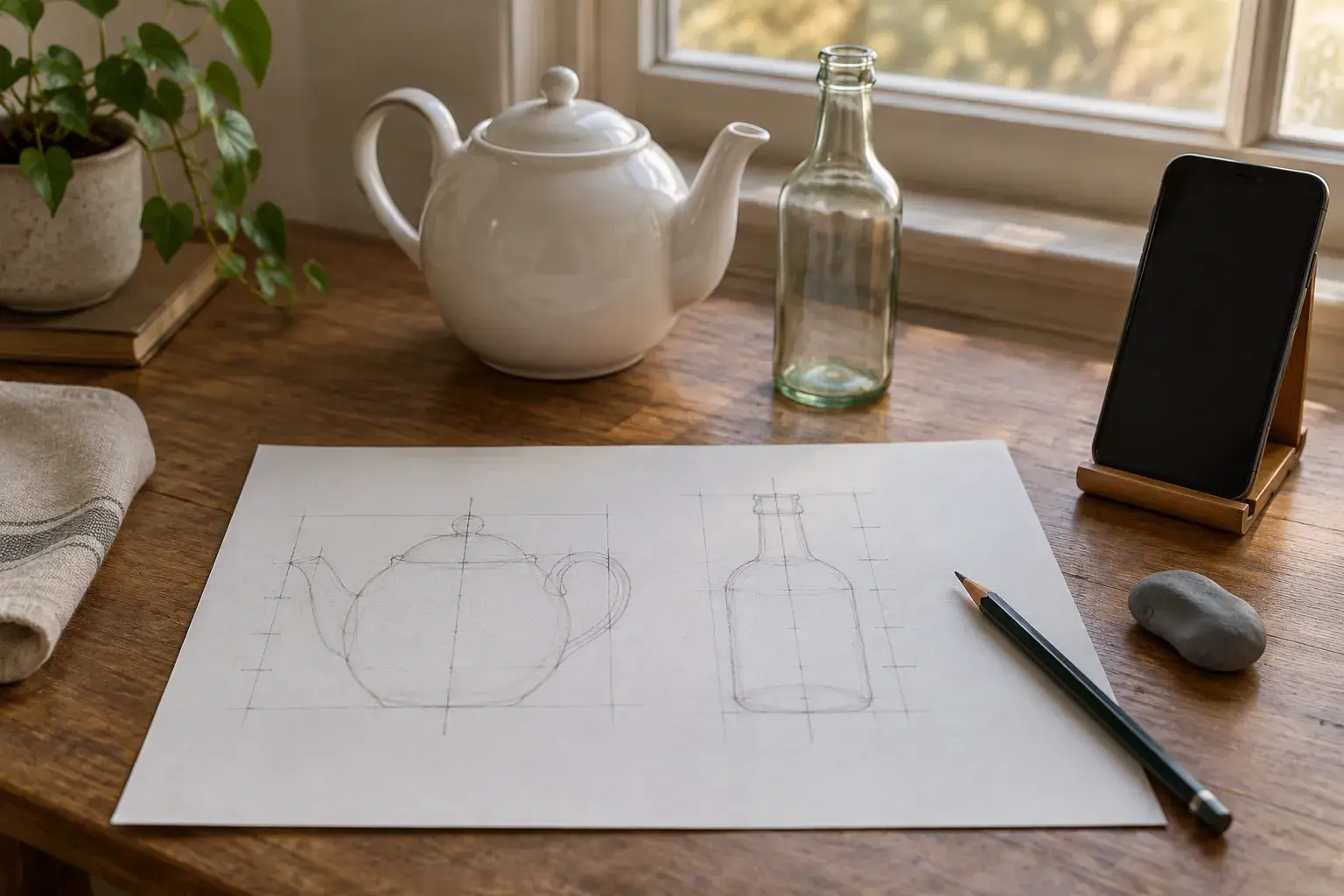
Drawing proportions for beginners comes down to one habit: measure, don't guess. Pick one part of your subject as a unit, measure it with a pencil held at arm's length, and count how many units fit into everything else. Check angles and what lines up, then flip the page to catch what you missed.
Why do proportions go wrong?
Your brain corrects what you see. A far chair looks nearly as big as a near one, because you know its real size, and your hand draws what you know. Training does not switch this off: in a 2011 study, 23 artists were as fooled by perspective and shadows as 14 non-artists. Artists get it right by comparing the drawing with the scene, again and again.
- A unitOne clear part, like a mug's height.
- MeasuringPencil at arm's length, thumb as the marker.
- AnglesPencil level or upright, compare the slant.
- Plumb linesWhat sits straight above what?
- Negative spaceThe gaps, like the space inside a handle.
How to draw proportions in 6 steps
Light lines, an HB pencil, and a subject that stays put.
- Box it. Measure the full width against the full height and draw that box lightly.
- Pick a unit. Choose one clear part, such as the mug's height or the head.
- Measure. Arm straight, one eye closed: pencil tip on one end of the unit, thumb on the other.
- Count. How many units fit into the width, the handle, the body? Mark each one with a short tick.
- Check angles and plumb lines. Hold the pencil level: is the top of the handle level with the rim, or lower?
- Read the gaps. Draw the shape of the space inside the handle. If the gap is wrong, so is the handle.
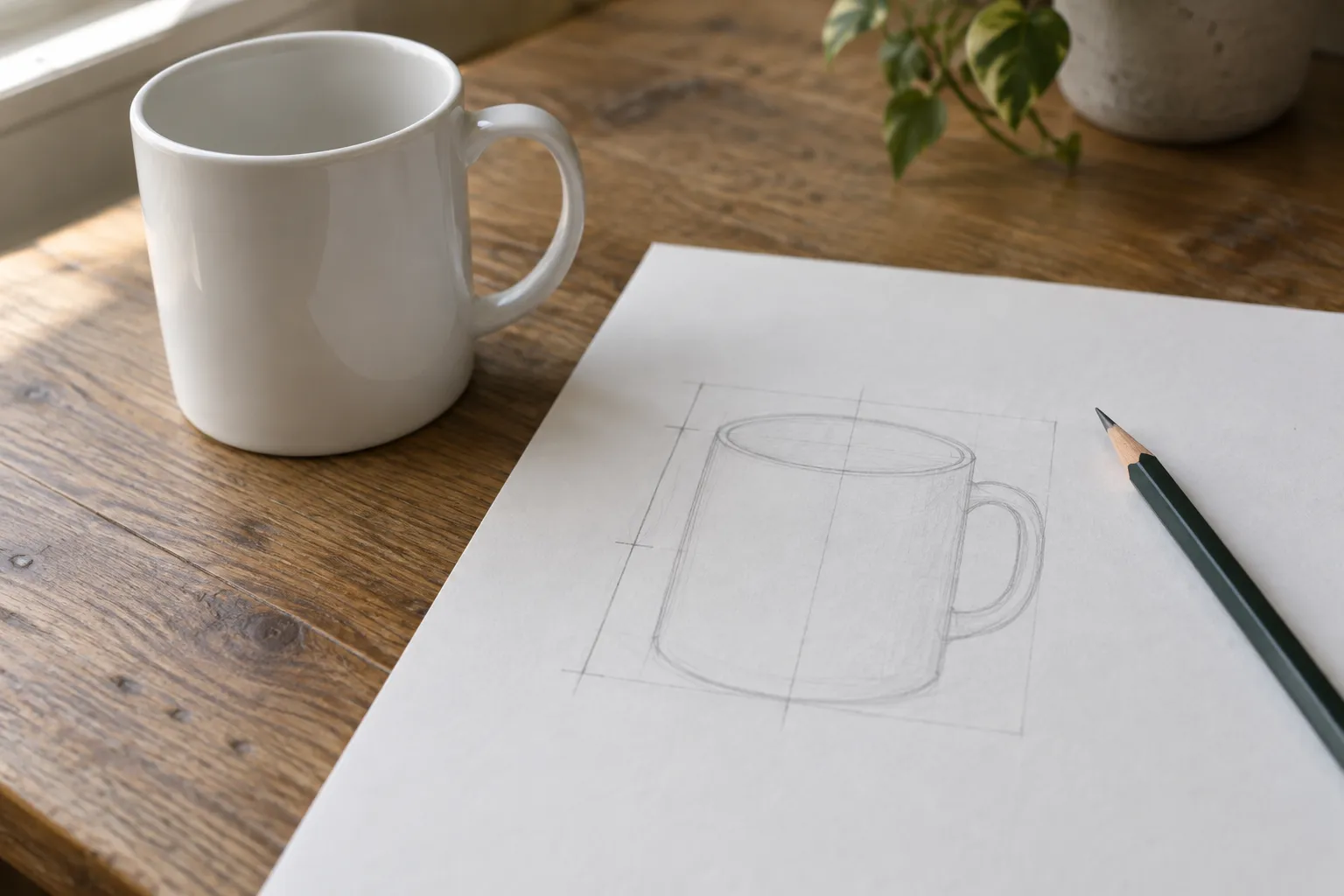
What does it look like in a real drawing?
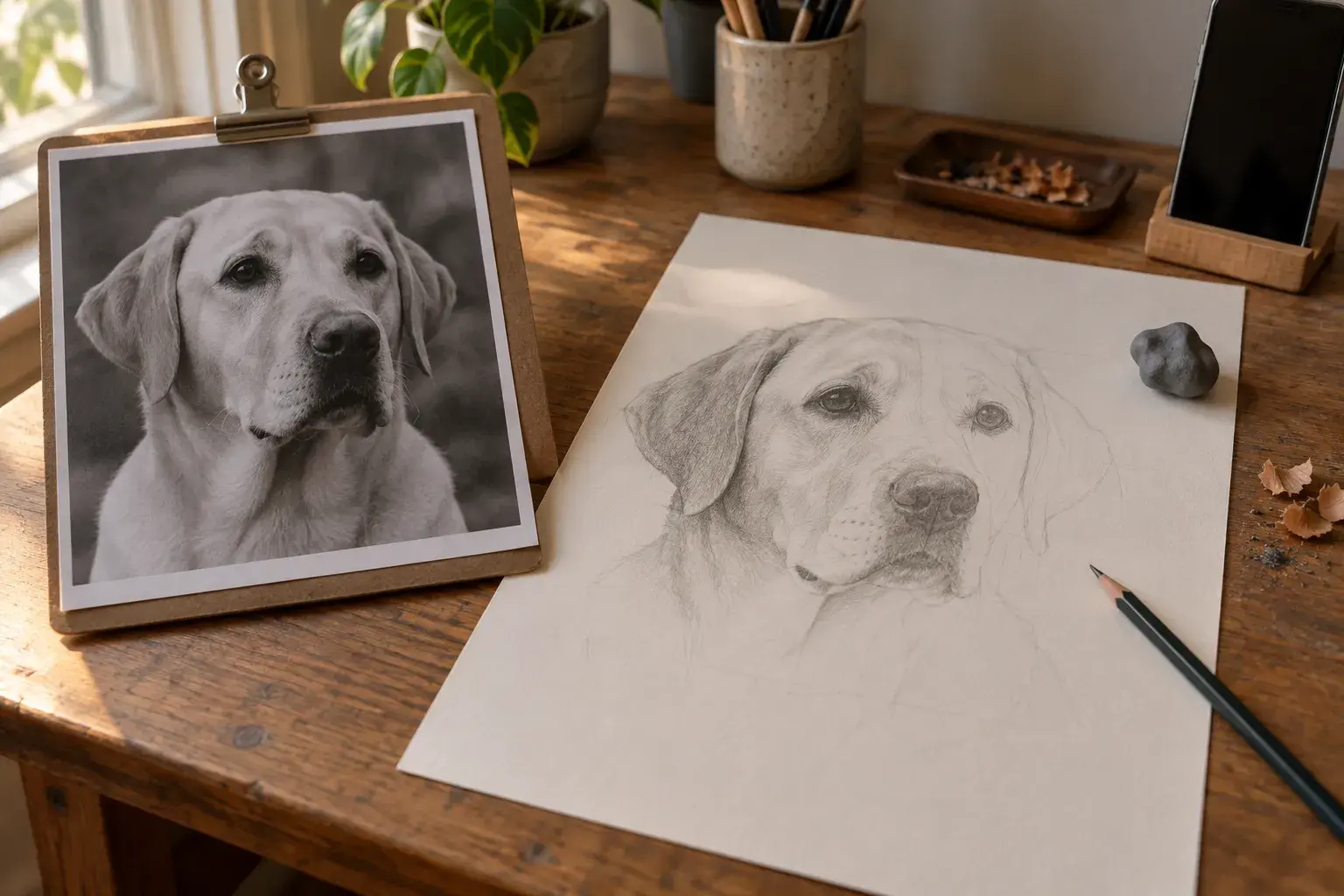
In the Labrador lesson, the second stage sets the guide lines: a center line, an eye line and a box for the muzzle. The eyes and nose land on them in the next stage.
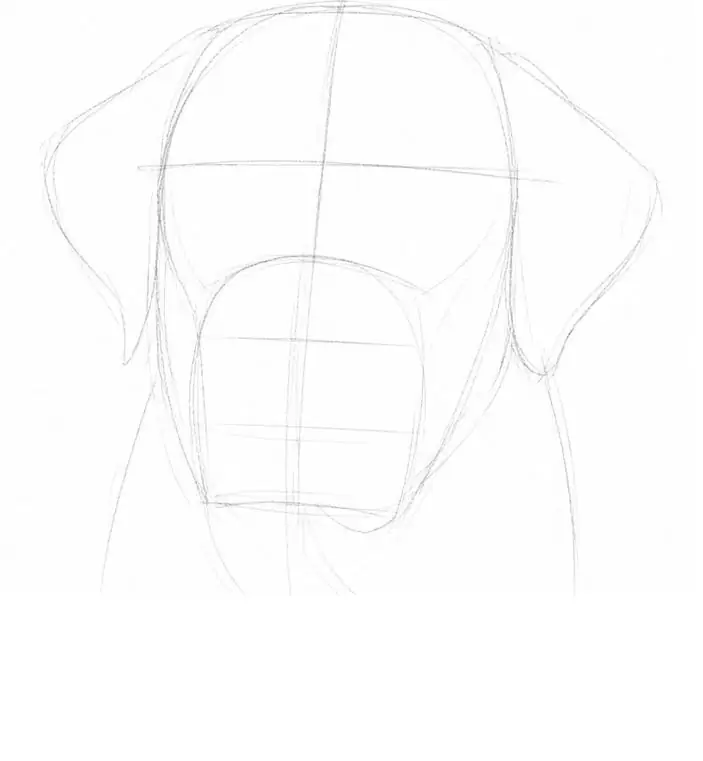
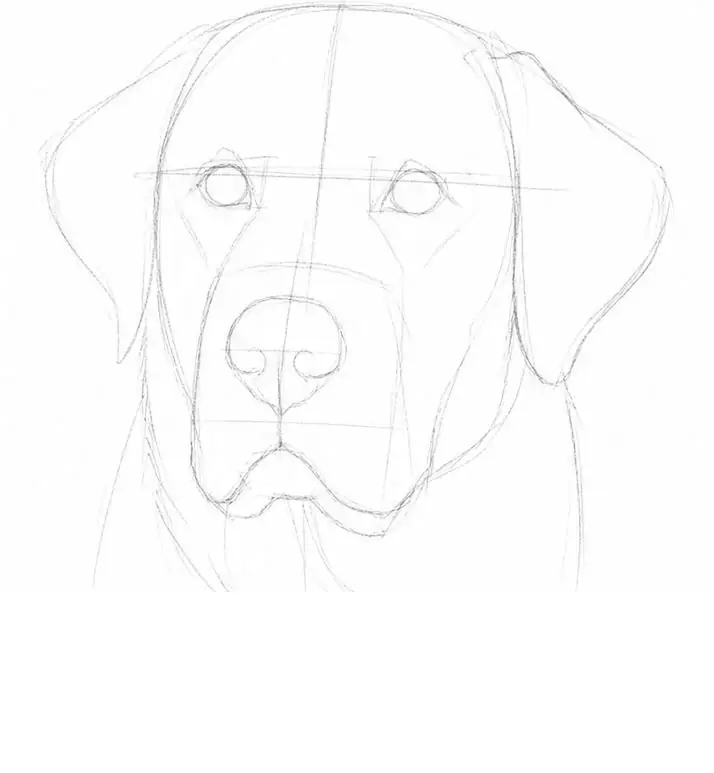
Every Sketchwise lesson works in that order: big shapes and proportions first, then contours, shading and details. You draw on paper, can photograph the page at an optional checkpoint before shading, and the final report scores proportions.
How do you check proportions?
- Step back two meters
- Flip it in a mirror
- Re-measure one unit
- Fix the biggest error
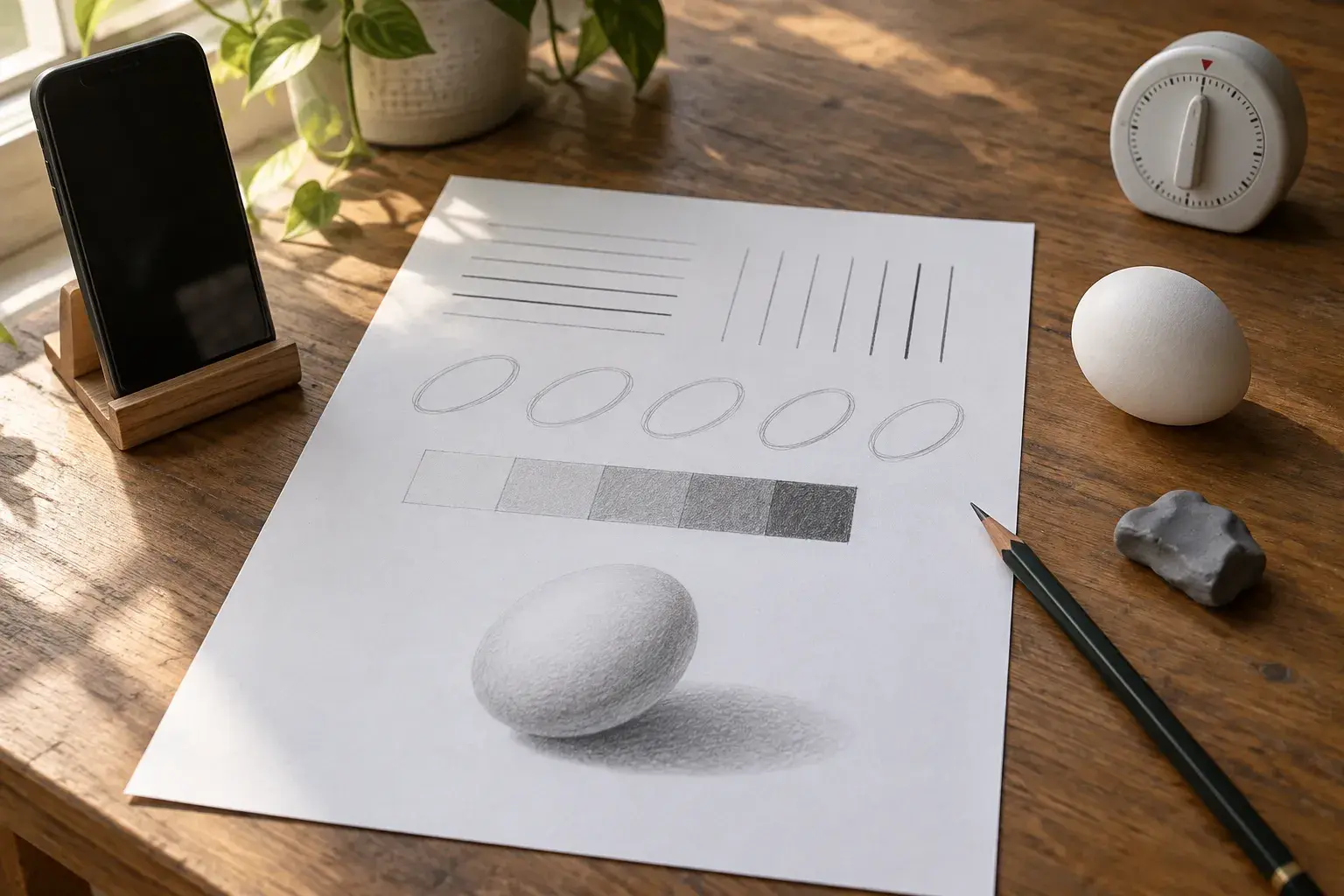
Measuring is exercise 4 in drawing exercises for beginners. For a pet or a portrait, the same steps work on a reference: see how to draw from a photo.
Frequently asked questions
What are the basic face proportions?
On an average adult head, the eyes sit about halfway down and are about one eye width apart. Treat these as starting points, then measure your own reference.
How can I get better at drawing proportions?
Draw simple real objects (a mug, a bottle, a shoe) and measure every one. Date the pages and compare week 1 with week 4.
Is using a grid cheating?
No, but a grid places the lines for you. Use one to check a block-in that looks wrong, then go back to measuring.