How to shade drawings with a pencil, from a value scale to a finished apple
How to shade drawings with a pencil: a five-value scale, hatching or smooth tone, one light, and six steps from shadow shape to highlight.
Learning how to shade drawings with a pencil starts with values, not with technique: five tones from paper white to your darkest dark. Then you pick one light, fill the shadow side with an even tone and build the darks in light layers. Hatching and smooth tone are just two ways to lay those layers down.
What do you need to shade with a pencil?
- HBThe outline and the lightest layers.
- 2BMiddle tones and most of the shadow side.
- 4B or 6BOnly the darkest darks, at the very end.
- Kneaded eraserPress and lift for highlights. Do not rub.
Start with a five-step value scale
Paper whiteDarkest dark
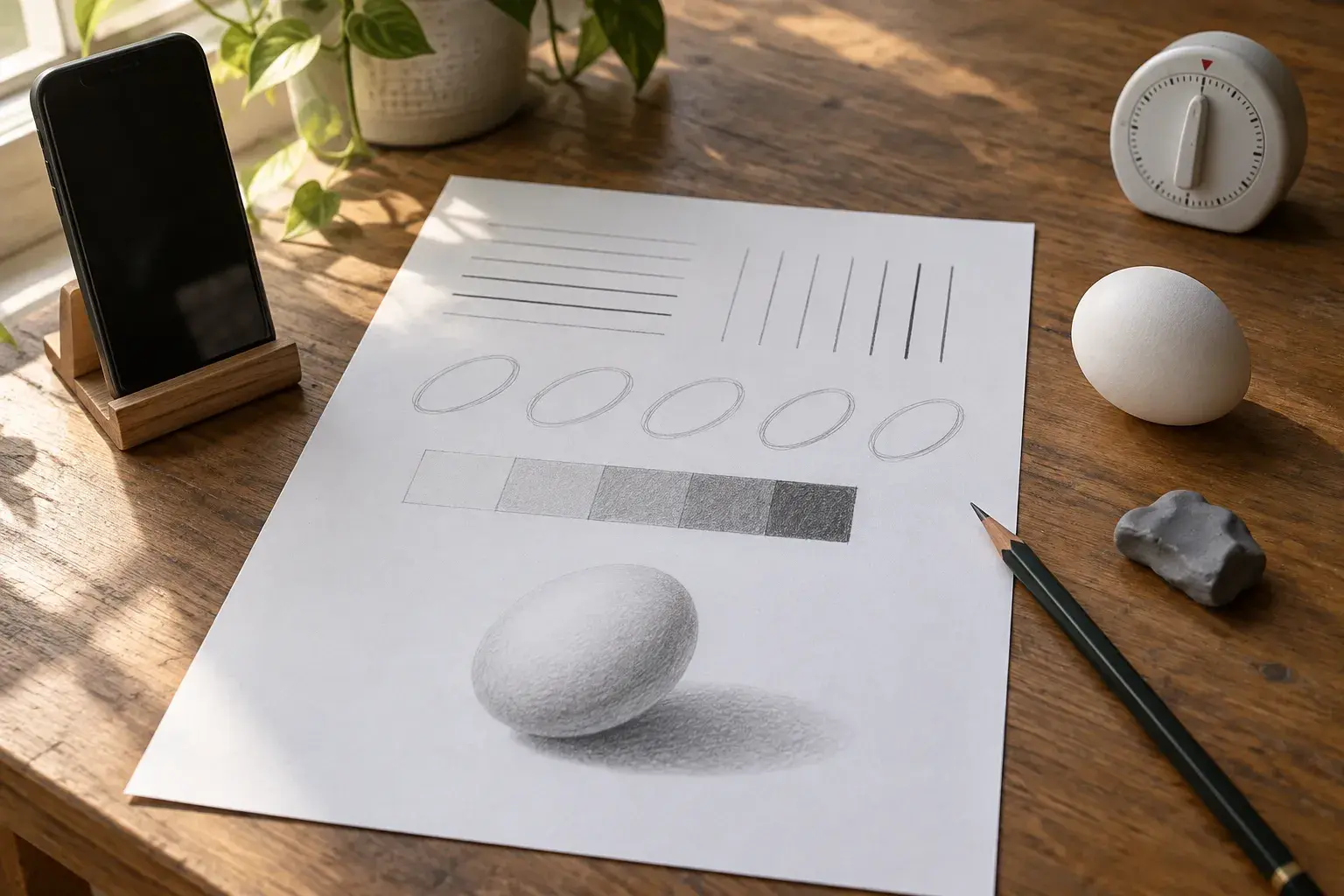
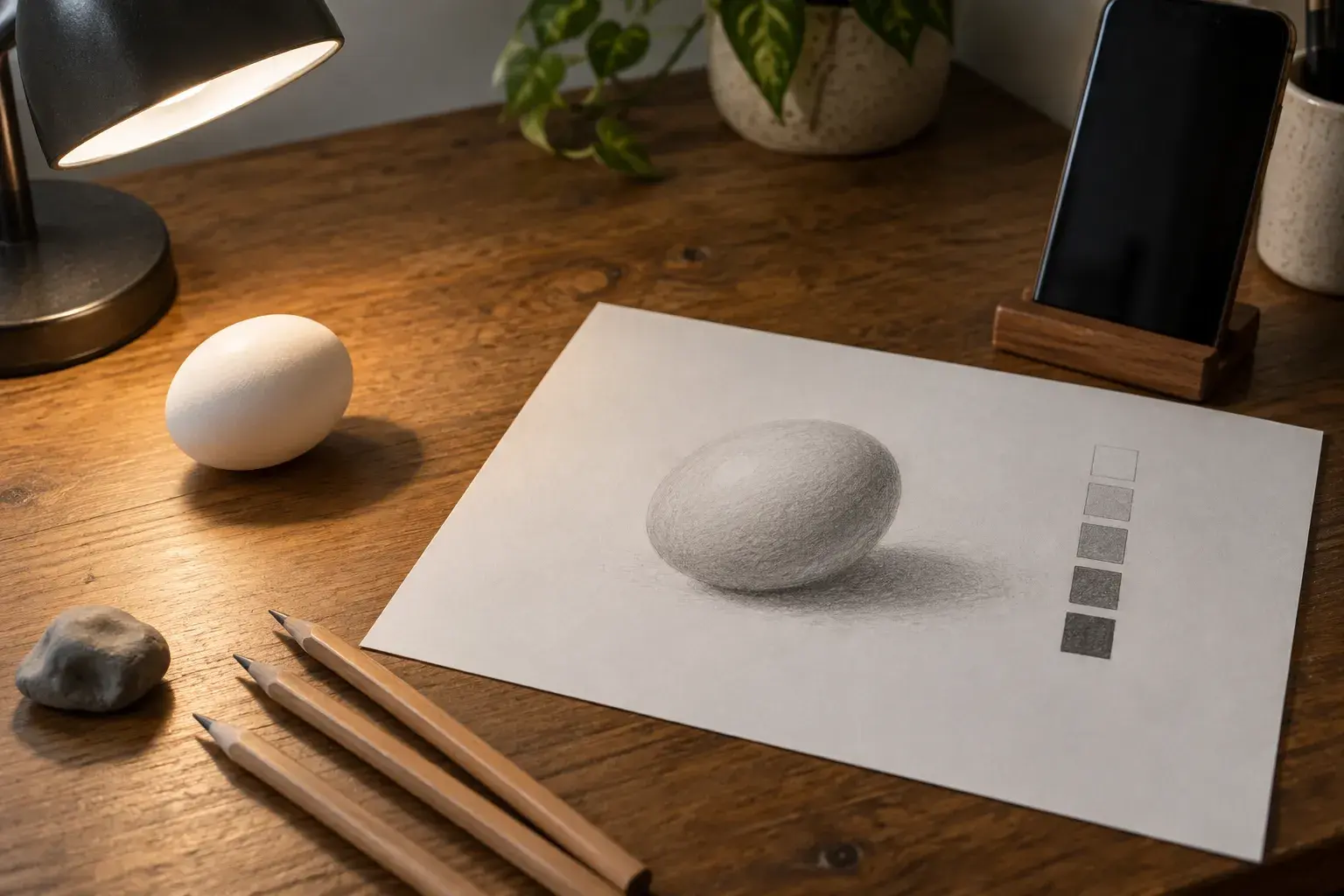
Draw five boxes in a row. Leave the first one white, make the last one as dark as your softest pencil allows, then fill in the three between. Every shaded drawing is these five tones in the right places. The value scale is also exercise 5 in our drawing exercises for beginners.
Hatching, cross-hatching or smooth tone?
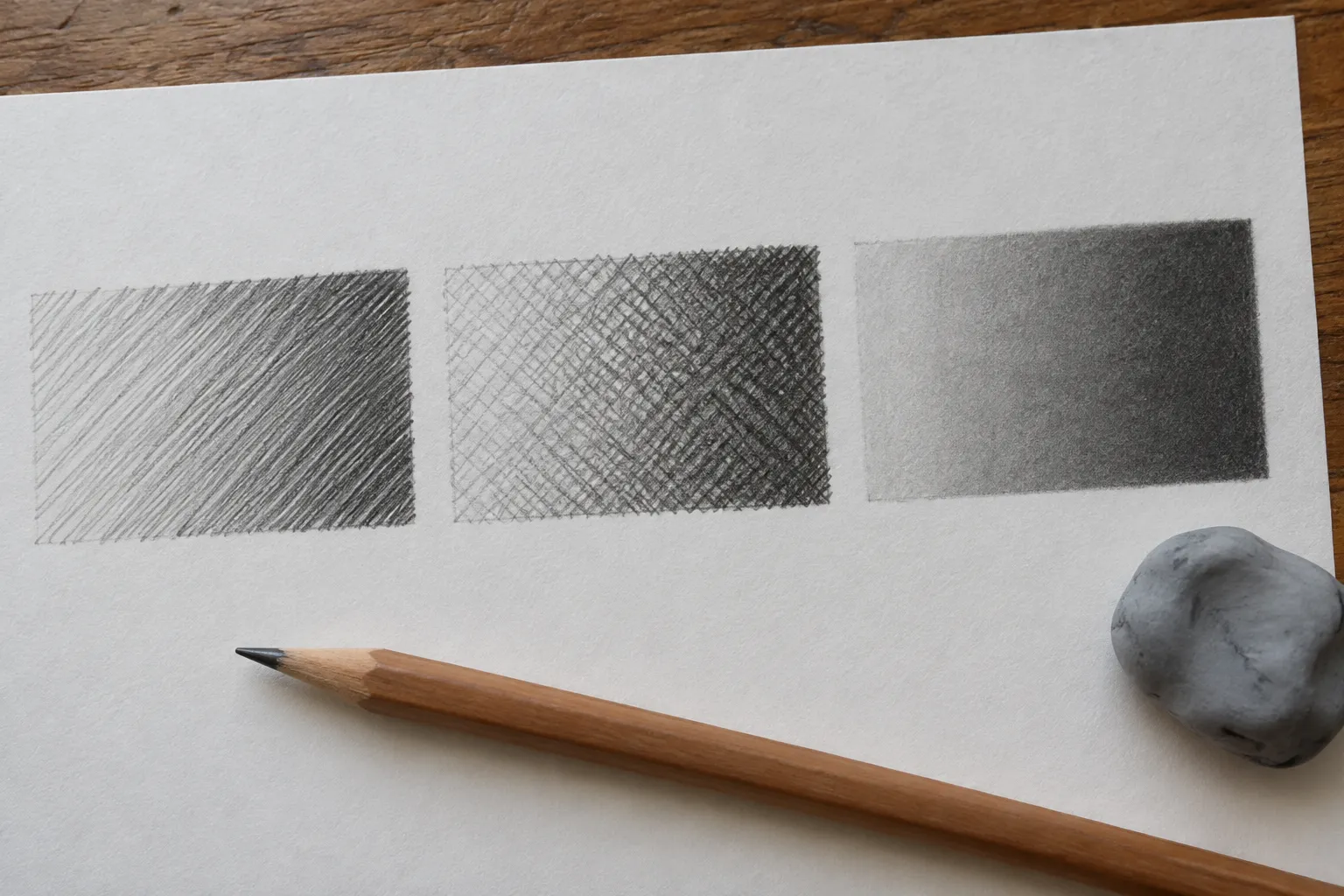
- Hatching: parallel lines. Closer lines read darker.
- Cross-hatching: a second layer of lines at an angle, for deeper tones.
- Smooth tone: small overlapping ovals with a slightly blunt point, in several light passes.
All three work. For your first drawings, pick one and stick to it on the whole page.
How to shade drawings step by step
Put an apple or an egg under one lamp, with the other lights off.
- Outline lightly with the HB, and mark where the shadow side begins.
- Fill the shadow side with one even middle tone (2B). Leave the lit side as paper.
- Darken the core shadow: the band where the form turns away from the light, just inside the shadow edge.
- Add the cast shadow, darkest right under the object, softer as it moves away.
- Lift the highlight with the kneaded eraser.
- Squint and compare with your value scale. Can you find all five tones?
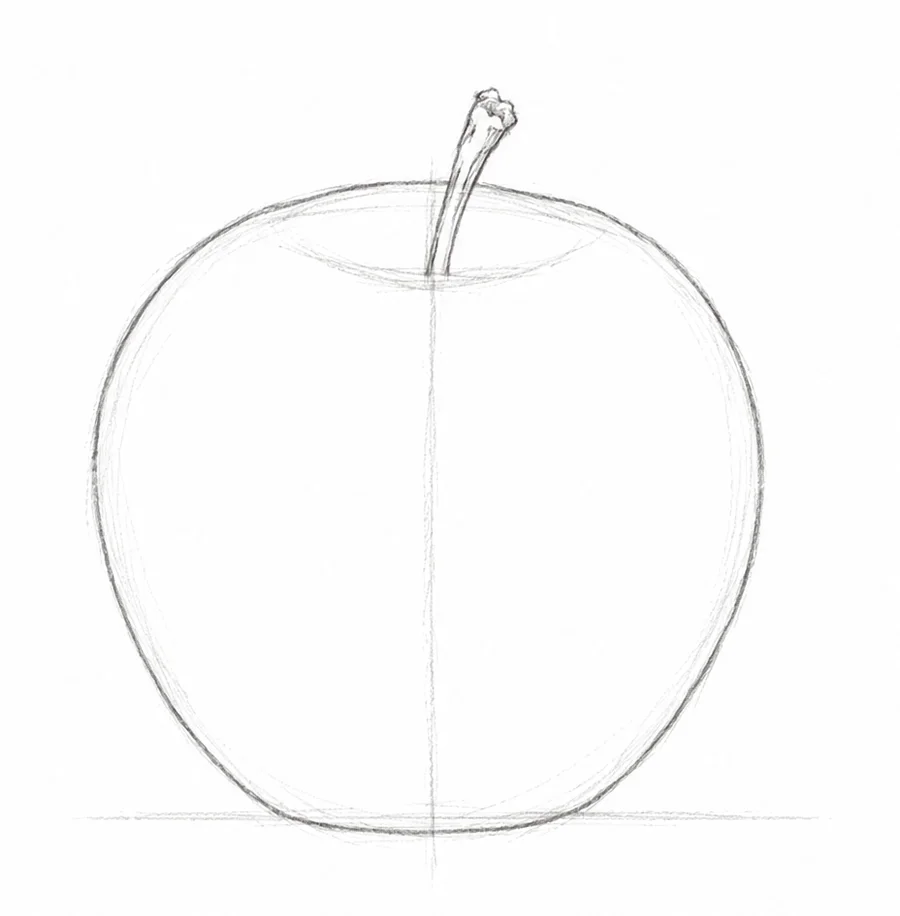
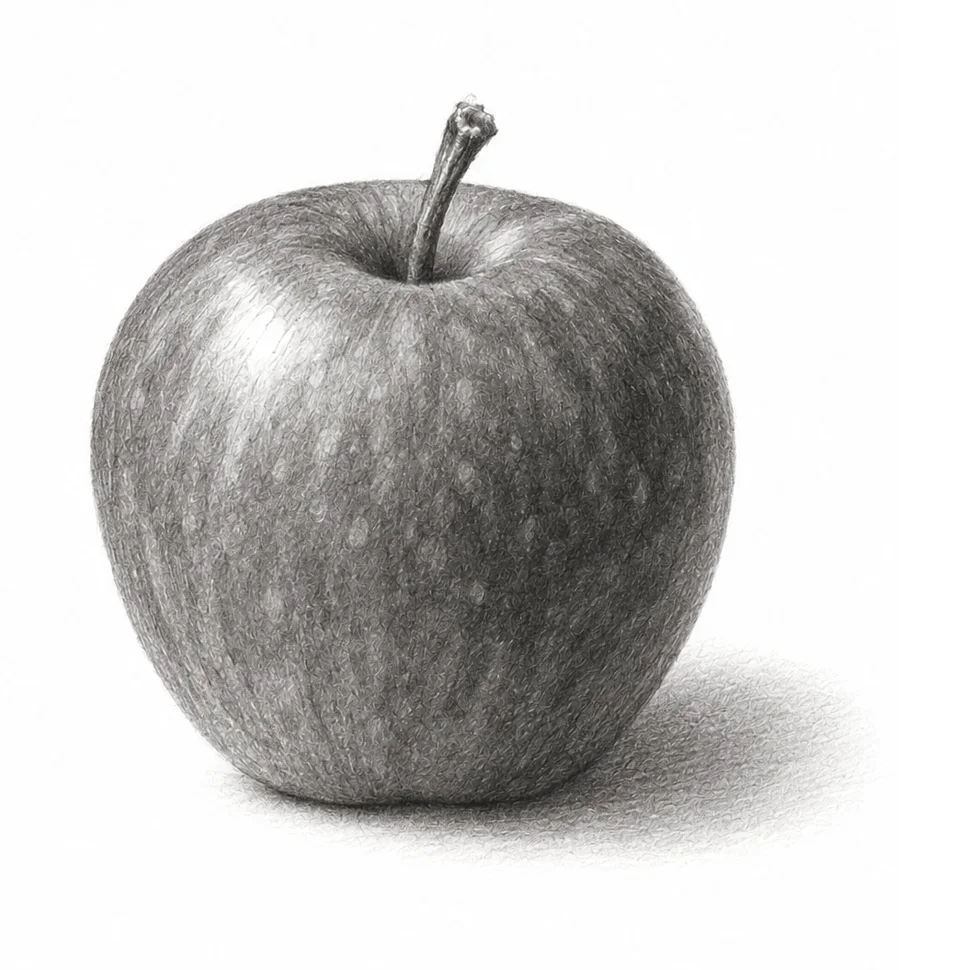
Follow these stages in the shaded apple lesson. Keep every object on the page lit from the same side: in a 1988 study in Nature, V. S. Ramachandran found that our eyes read shape from shading as if a single light source lit the whole image. Want to shade your own photo? Sketchwise turns it into a staged lesson in the realistic graphite style, and the final report scores your shading. Its three values and layering drills train exactly the skills above, on paper.
Frequently asked questions
Which pencil is best for shading as a beginner?
A 2B does most of the work. Add an HB for light layers and a 4B or 6B for the darkest darks.
Should I blend with my finger?
Better not: skin oil leaves smudges that are hard to erase. If you want a softer tone, blend lightly with a paper stump or a tissue after the layers are down.
How do I shade smoothly without visible lines?
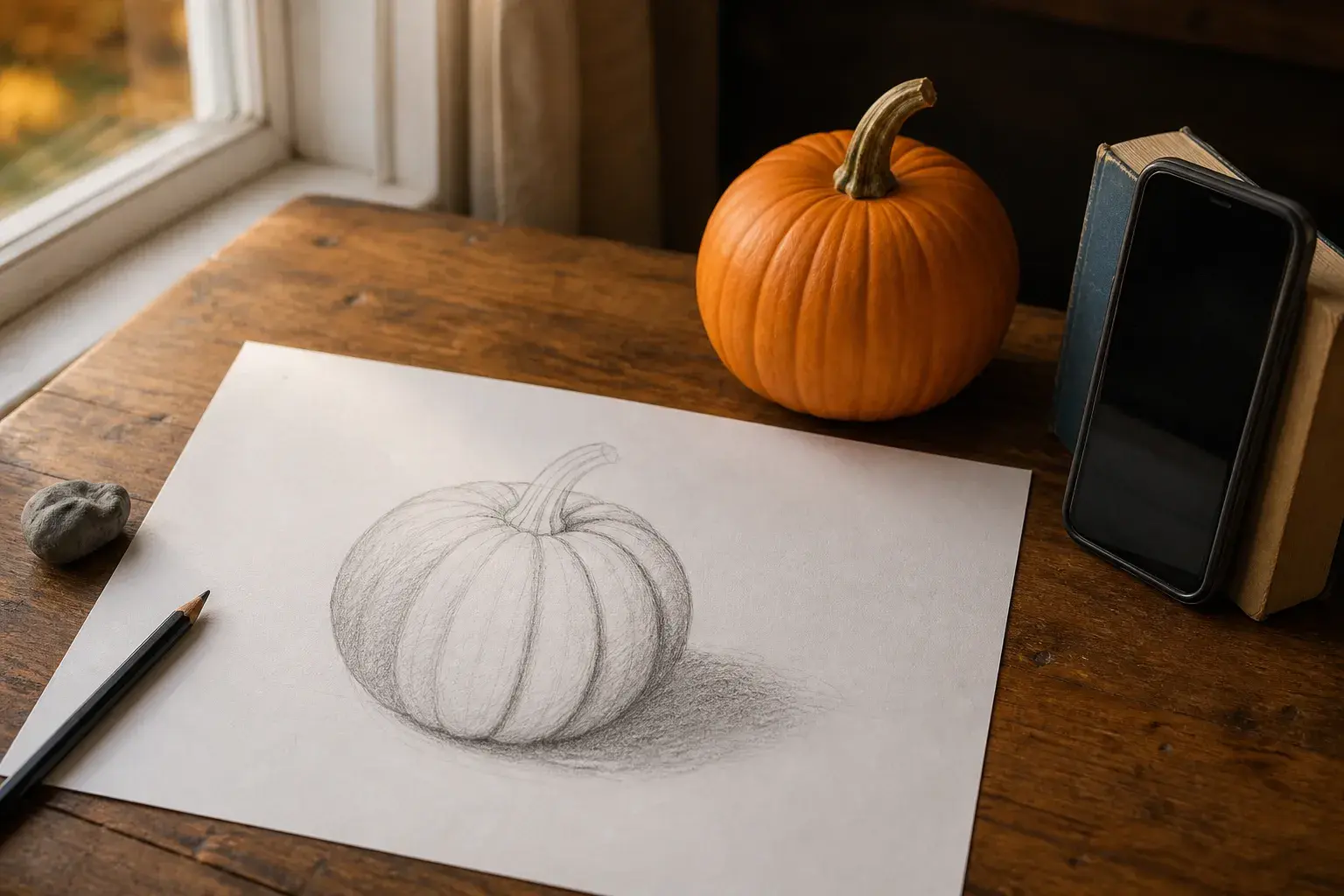
Use small overlapping ovals instead of back-and-forth strokes, keep the pressure light and build the tone in several passes. A shaded pumpkin is good practice after the apple.