Drawing exercises for beginners: six short drills that train your eye and hand
Six drawing exercises for beginners, each with a check: lines, ellipses, blind contour, measuring and values, in a 15-minute routine for tonight.
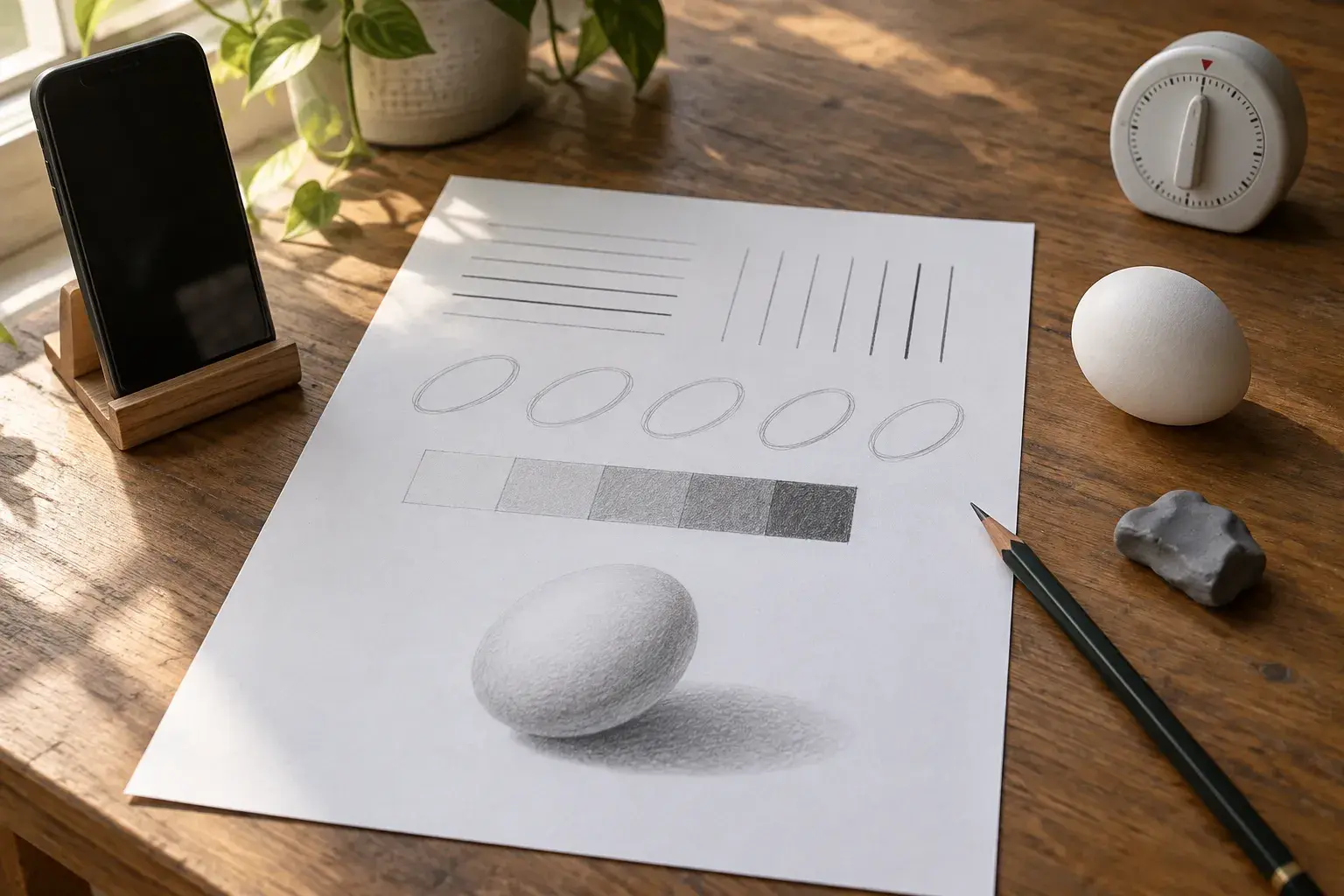
The best drawing exercises for beginners are short, and each one trains a single skill: line control, seeing, proportion or light and dark. Do three of the six below in a 15-minute session and finish on a real object. Every exercise comes with a check, so you know if it worked.
Which drawing exercises should beginners do first?
Start with the skill that bothers you most. Almost every drawing problem is one of these four.
- Line controlGhosted lines and ellipses. One confident stroke, not five scratchy ones.
- SeeingBlind contour. Your eyes learn to follow an edge.
- ProportionPencil measuring. Width against height, checked, not guessed.
- Light and darkA value scale and a shaded egg.
6 drawing exercises for beginners, each with a check
- Ghosted lines, 2 min. Mark two dots, hover between them twice, then draw in one stroke. Check: does it land on the dot?
- Ellipses, 2 min. Ten ellipses, each one circled lightly three times. Check: round ends, not points?
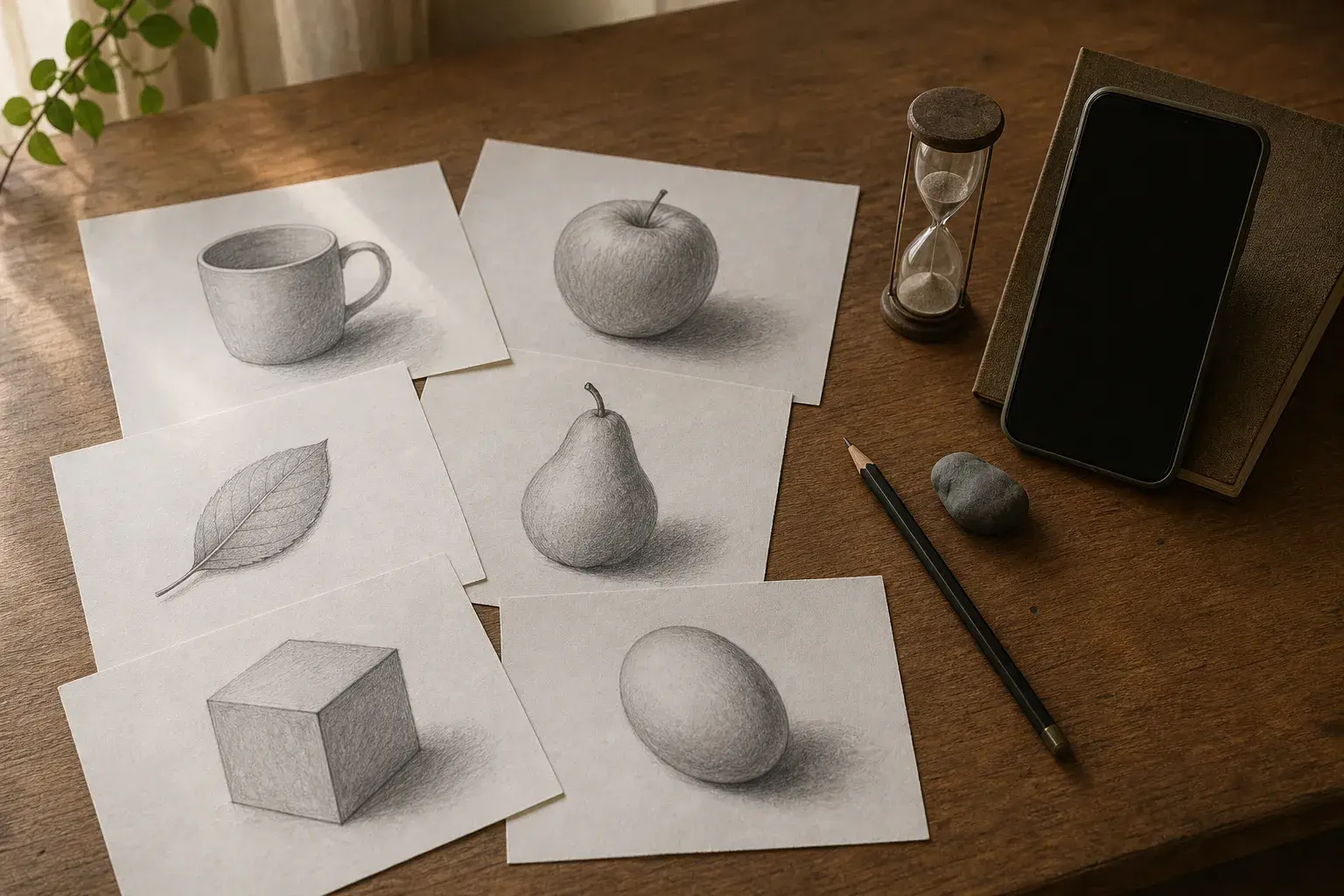
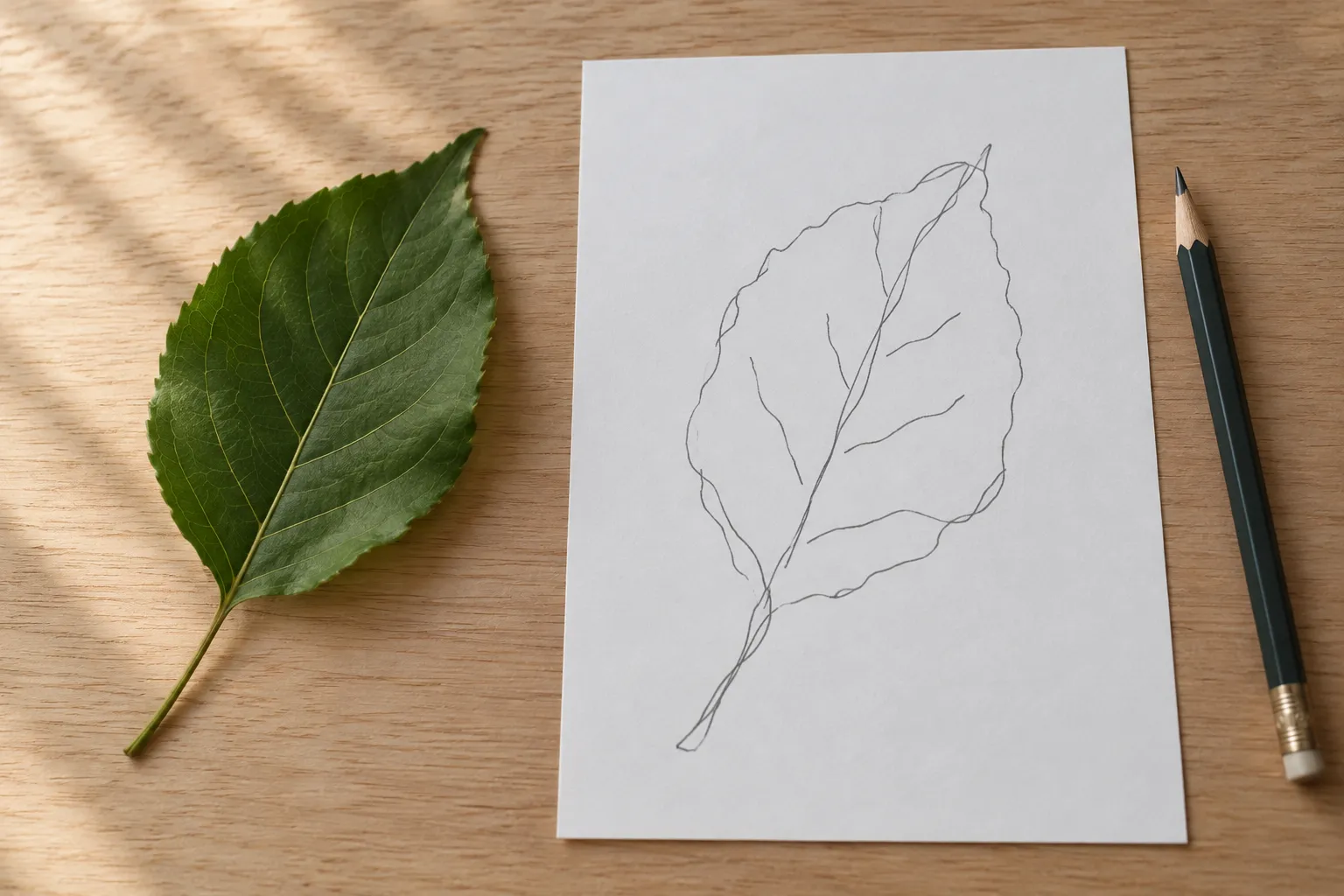
- Blind contour, 3 min. Draw a leaf slowly with your eyes on the leaf, never on the page. Check: did your eyes stay up?
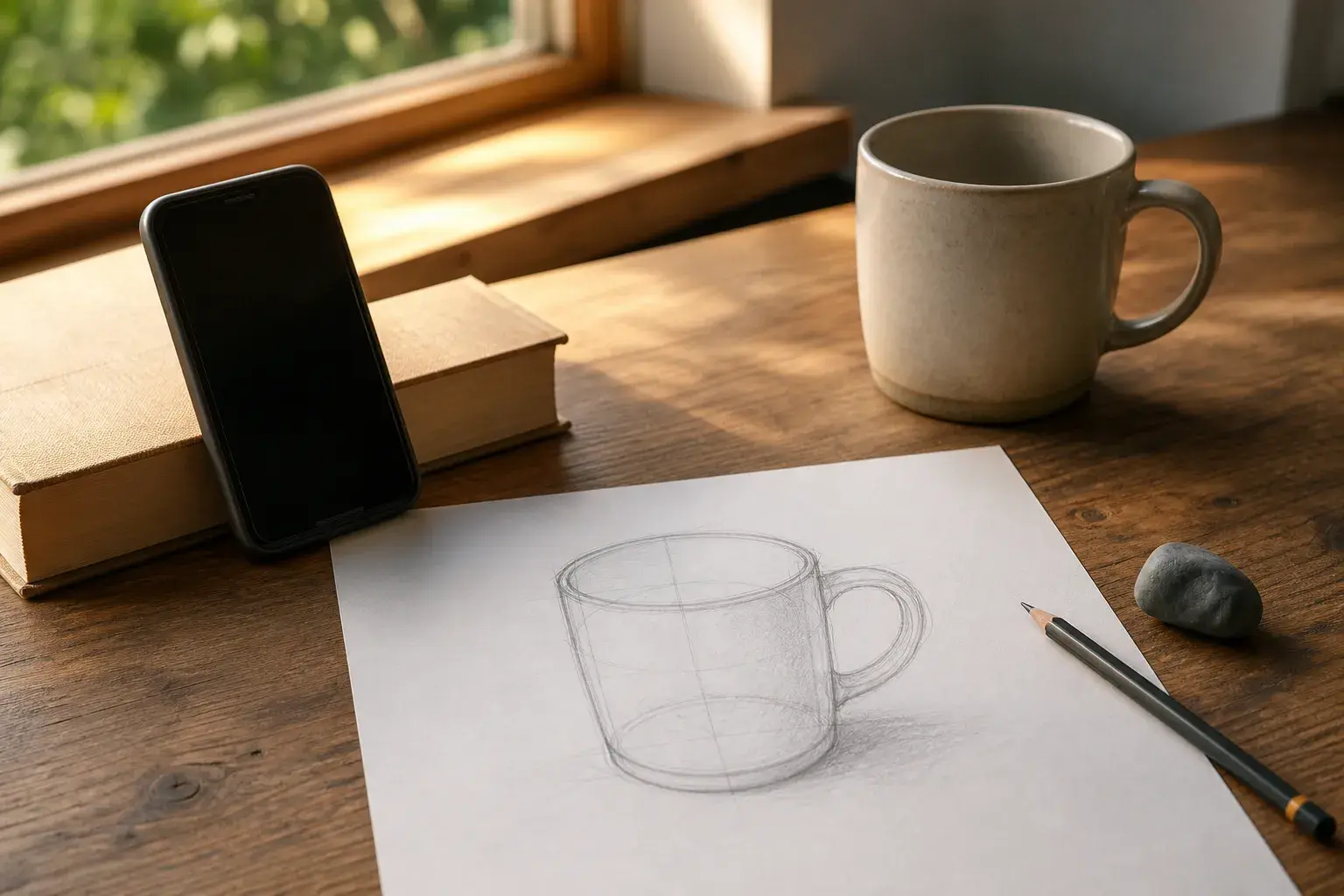
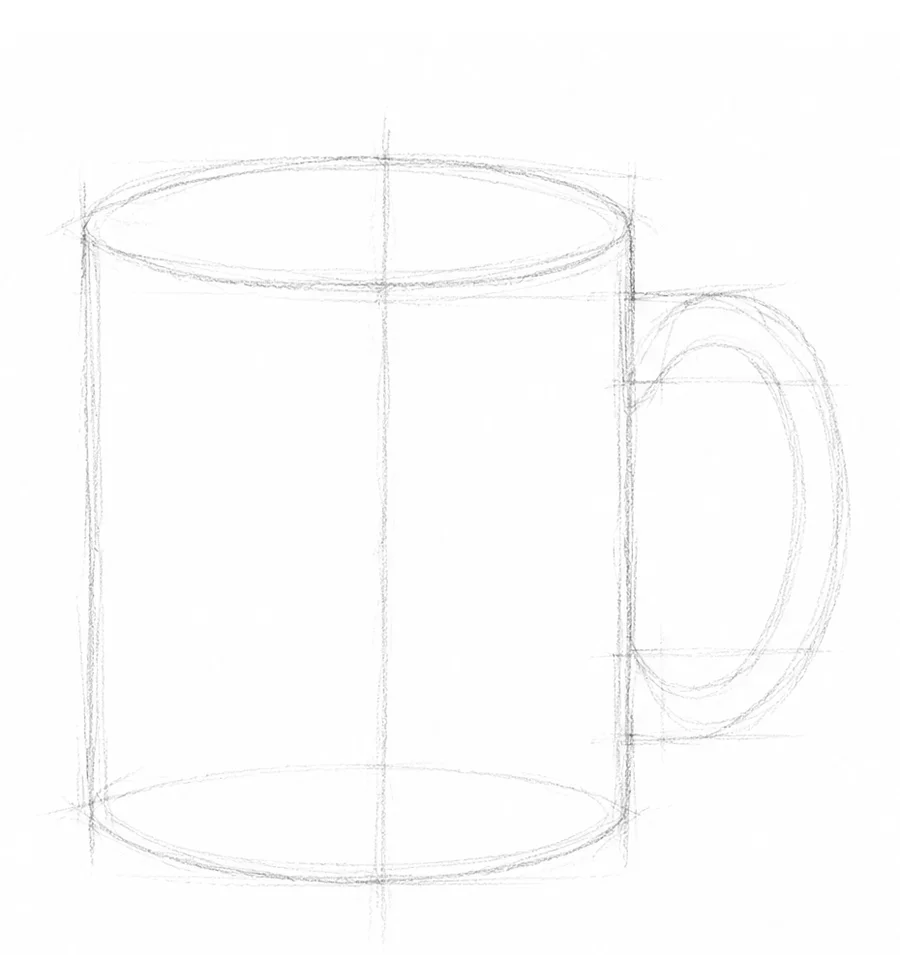
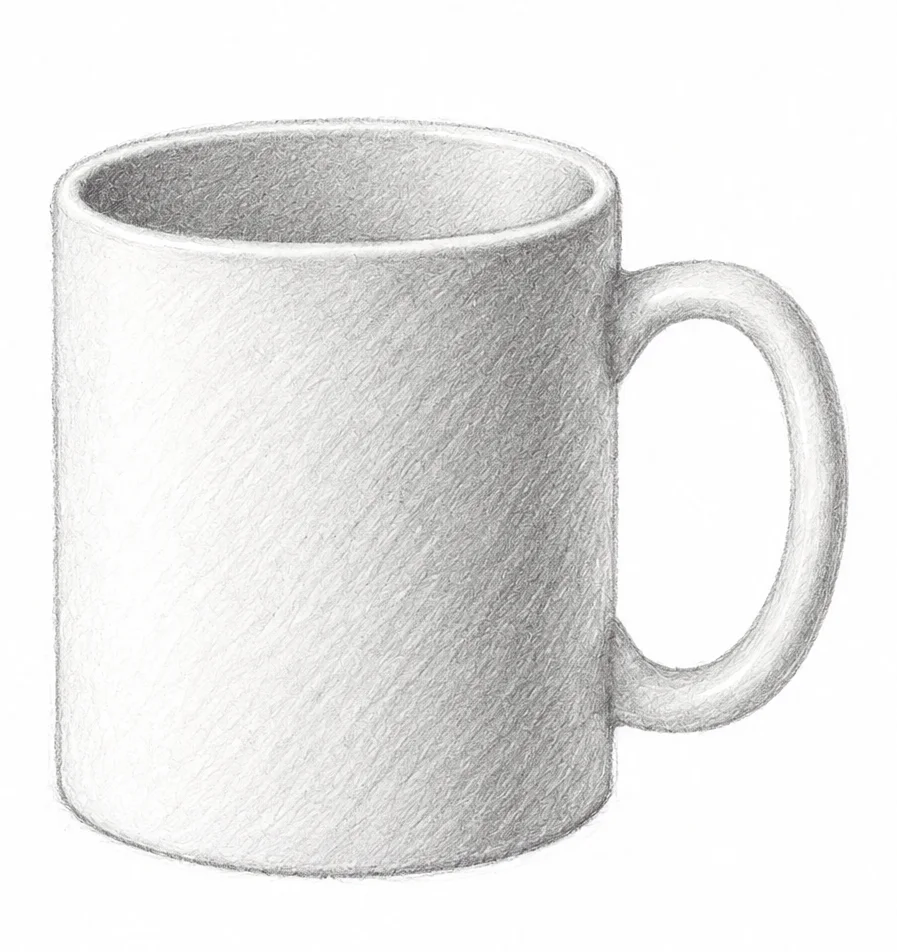
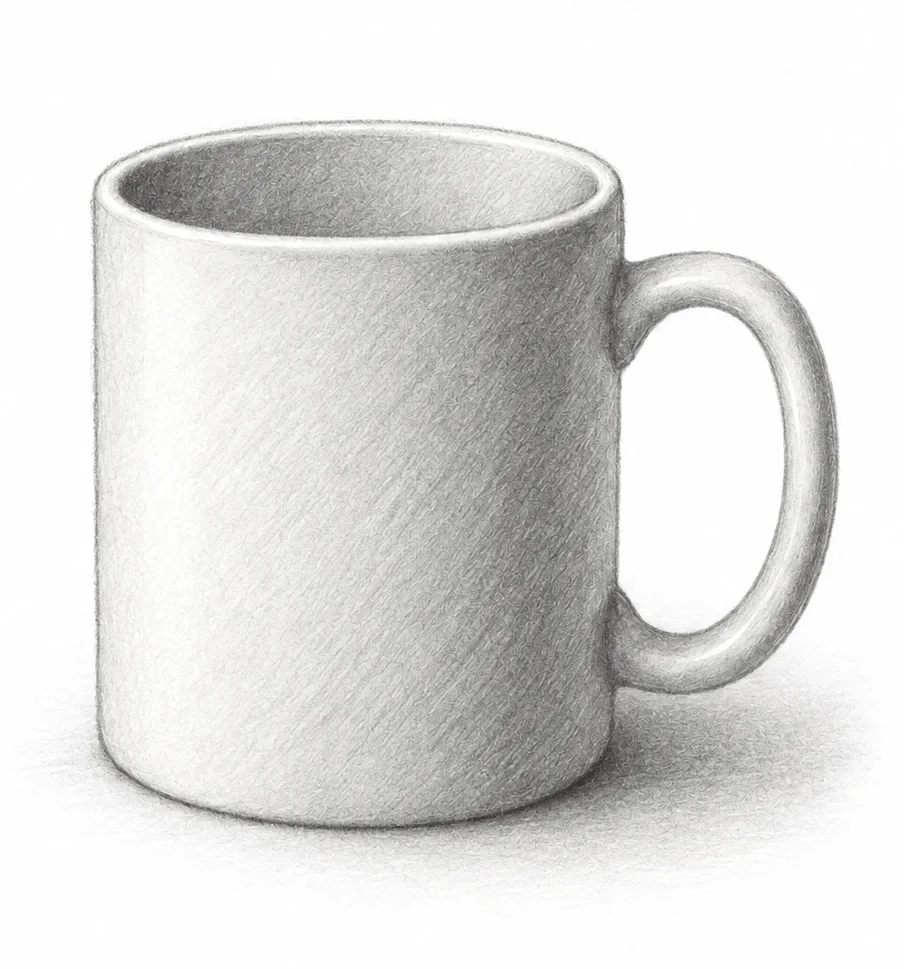
- Pencil measuring, 4 min. At arm's length, compare a mug's width with its height. Check: same ratio on your page?
- Value scale, 3 min. Five boxes from paper white to your darkest dark. Check: five clear steps when you squint?
- Shaded egg, 6 min. One egg under one lamp. Check: is the darkest spot right under the egg?
How long should you practice drawing exercises?
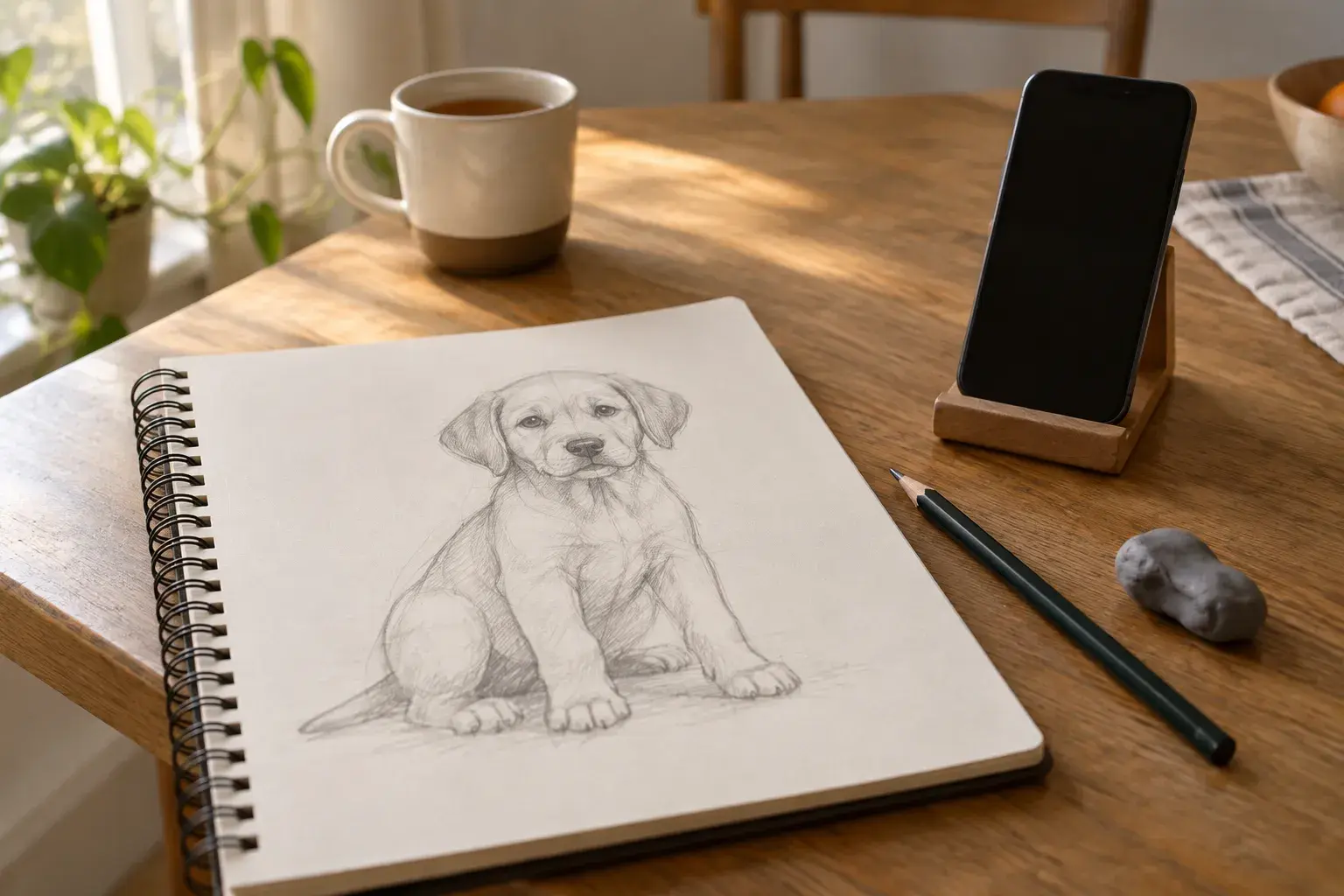
Fifteen minutes a day is enough, as long as the last part is a real drawing.
- Lines or ellipses, 3 min
- One seeing exercise, 4 min
- One real object, 8 min
- Compare and name one fix
Want a different task for every day? Take the 30 day drawing challenge for beginners.
Where do the exercises show up in a real drawing?
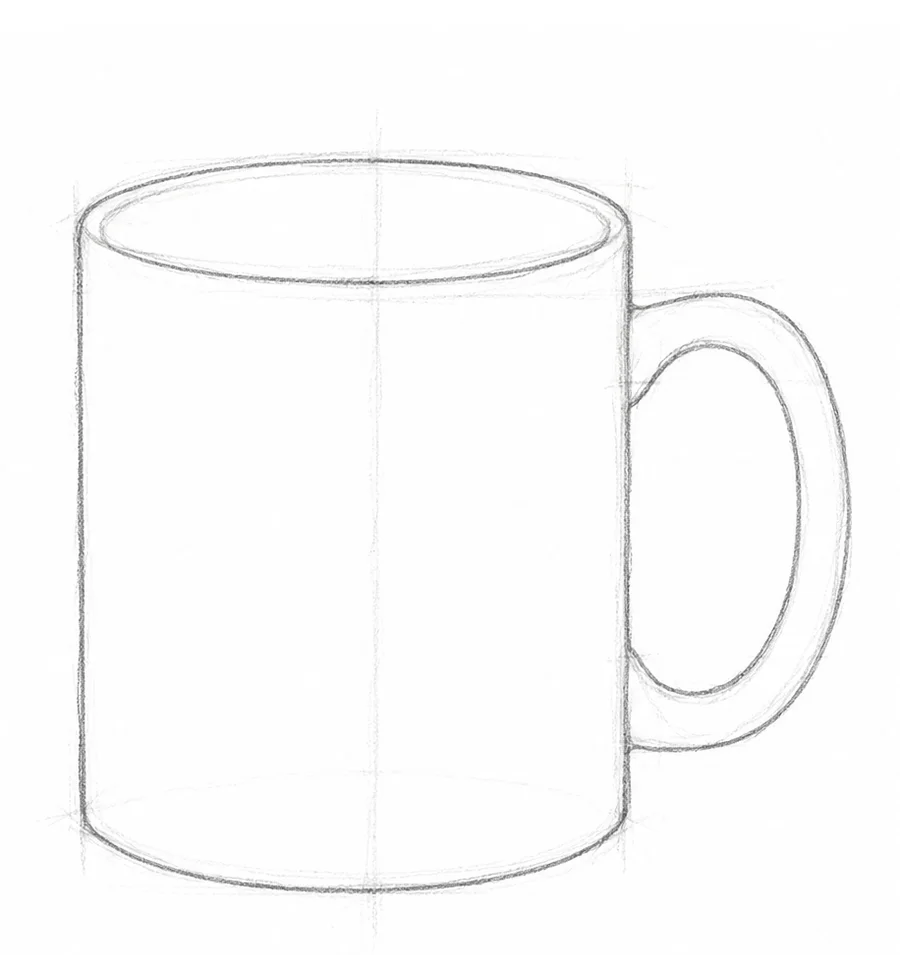
In the pencil mug lesson you use three of them at once: ellipses for the rim, measuring for width against height, and values for the shading.
Sketchwise has six skill drills (big shapes, spacing and angles, line control, three values, edge control and layering), and every final report names one drill to practice next. You still do them with a pencil on paper.
Frequently asked questions
Do drawing exercises for beginners really work?
They work best when each one has a check and the session ends on a real object. Exercises train the parts; drawing real things puts them together.
Does drawing upside down help beginners?
Less than its fame suggests. In a 2016 study, 126 students with no drawing training copied a face upright and upside down, and upside down the distance from eyes to mouth came out less accurate. Turn your finished page upside down to check it instead.
Pen or pencil for drawing exercises?
An HB pencil first: you can start light and darken later. Later, a pen is good for line exercises, because every stroke stays.