How to draw without a reference (it starts with using one)
How to draw without a reference: why your imagination draws symbols, how a visual library fixes that, and a four-week memory training plan on paper.
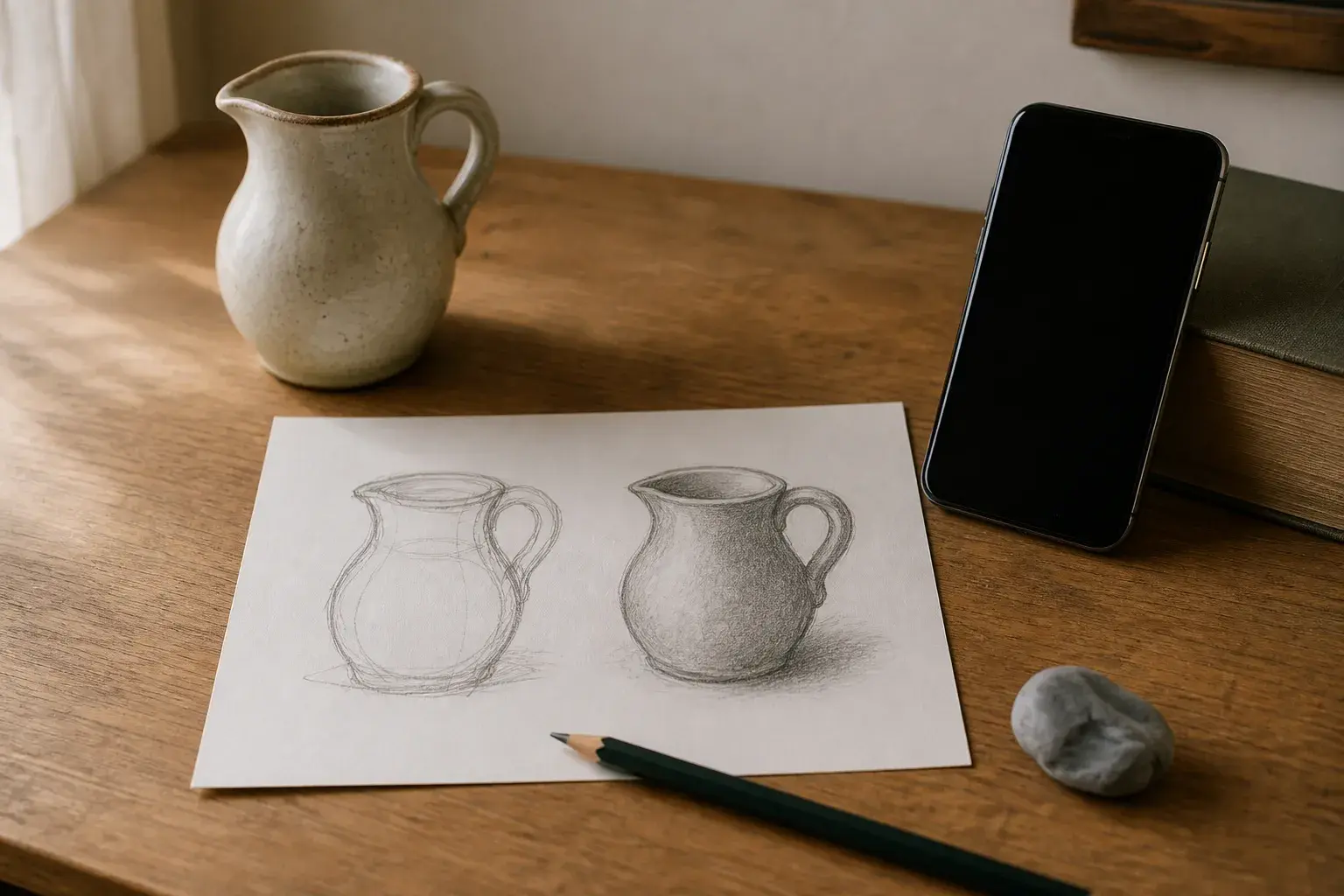
Here is how to draw without a reference: build a visual library first. For a few weeks you draw real objects and photos until their shapes, proportions and light patterns are stored in your head, then you draw them from memory and check against the original. Skill without a reference is built with references, not instead of them.
Why your imagination draws symbols
Ask yourself what a mug looks like and you "see" a handle and a cylinder, but not how wide the opening is compared with the height. Memory keeps what it needs to recognize things, not what a drawing needs. A 2016 review of drawing errors says the same: perception and stored symbols (an eye is an almond) shape what you draw. The way out is looking harder first, so memory has something better to hand you.
Is using a reference cheating? No. Peek when stuck, solve the problem, put it away.
The memory drill
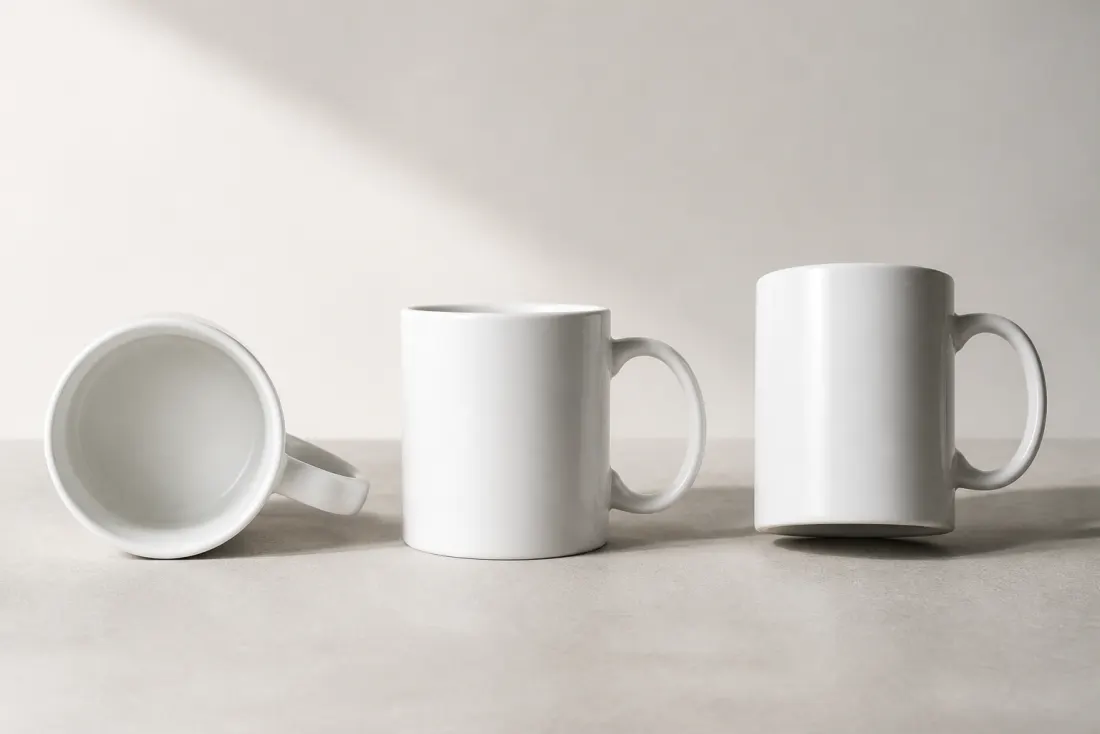
- Study 2 min
- Cover it
- Draw from memory, 5 min
- Compare and mark 3 fixes
- Redraw, 5 min
Use a simple object first: a mug, a jug, a pear. Say out loud what shapes it is made of, and note three proportions before you cover it. Repeat with the same subject for several days, then change it.
Five skills to build first
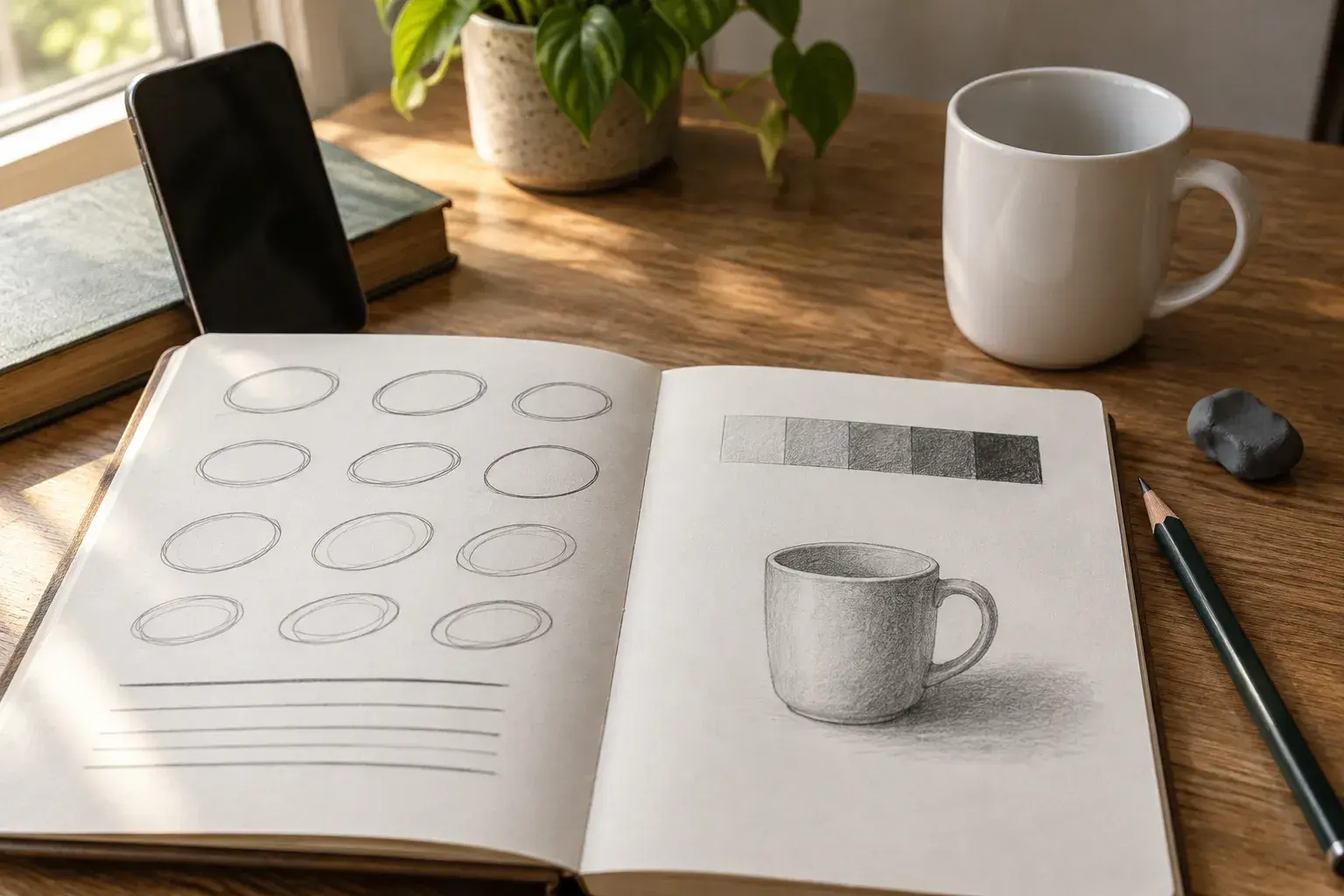
- Basic formsBox, sphere, cylinder and cone from three viewpoints.
- ProportionMeasure ten objects with your pencil and write the ratio on the page.
- Light and shadowShade an egg under one lamp, then flip the light.
- OverlapStack simple forms into new objects.
- Visual memoryThe drill above.
Drawing something you have never seen
Break it into forms you know and keep the references for details. Try an invented mug: tall and tapered, with a basket handle.
- Decide what changes (tall, tapered, handle on top).
- Keep what must stay true: the opening is still an ellipse, the walls have thickness.
- Block it in with a cone, a flat ellipse and a half circle.
- Pick one light direction and shade.
- Check a reference only for what you cannot solve, like how a basket handle attaches.
A four-week plan
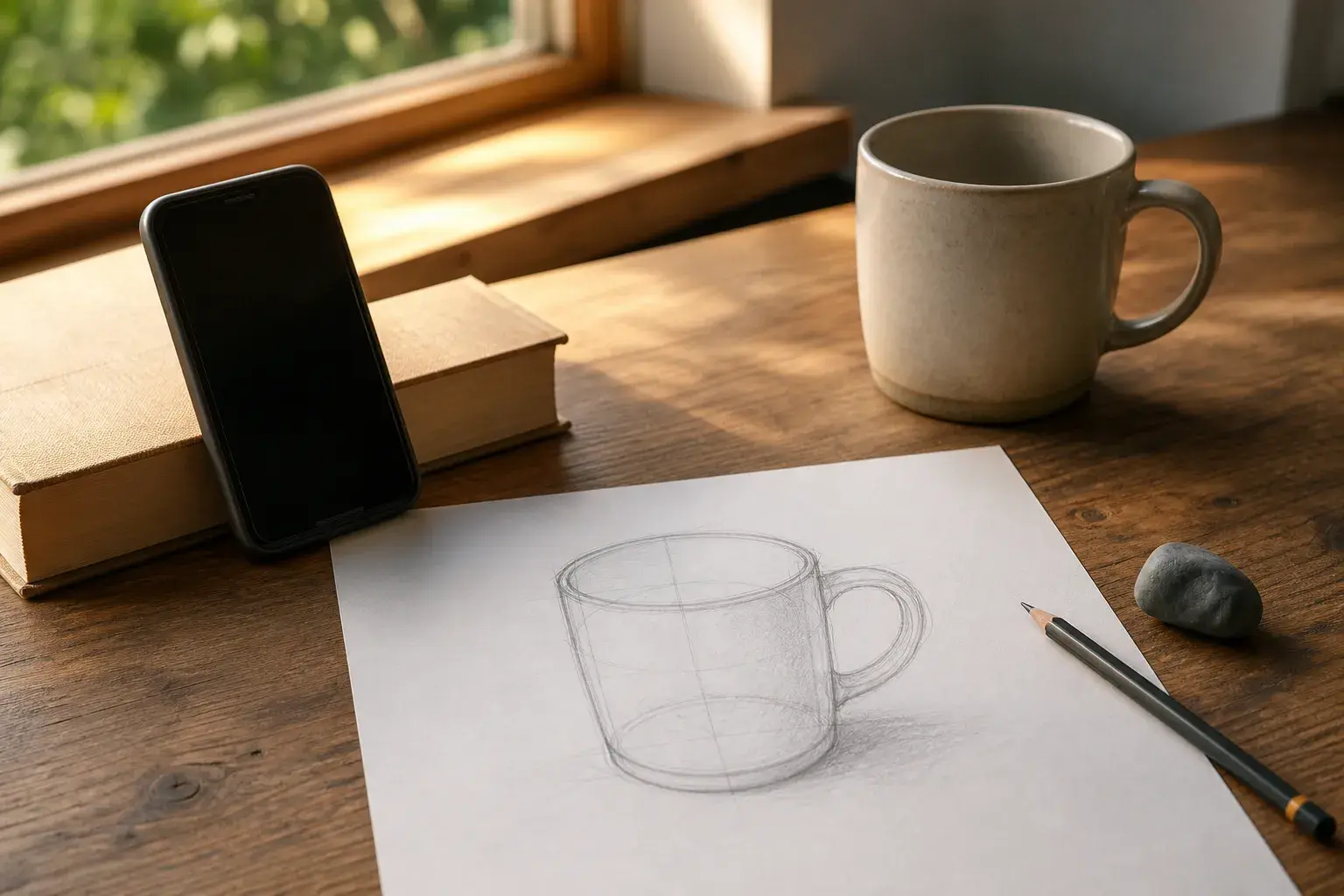
- Week 1Forms and proportion. Memory drill on a mug, with the pencil mug lesson as a staged example.
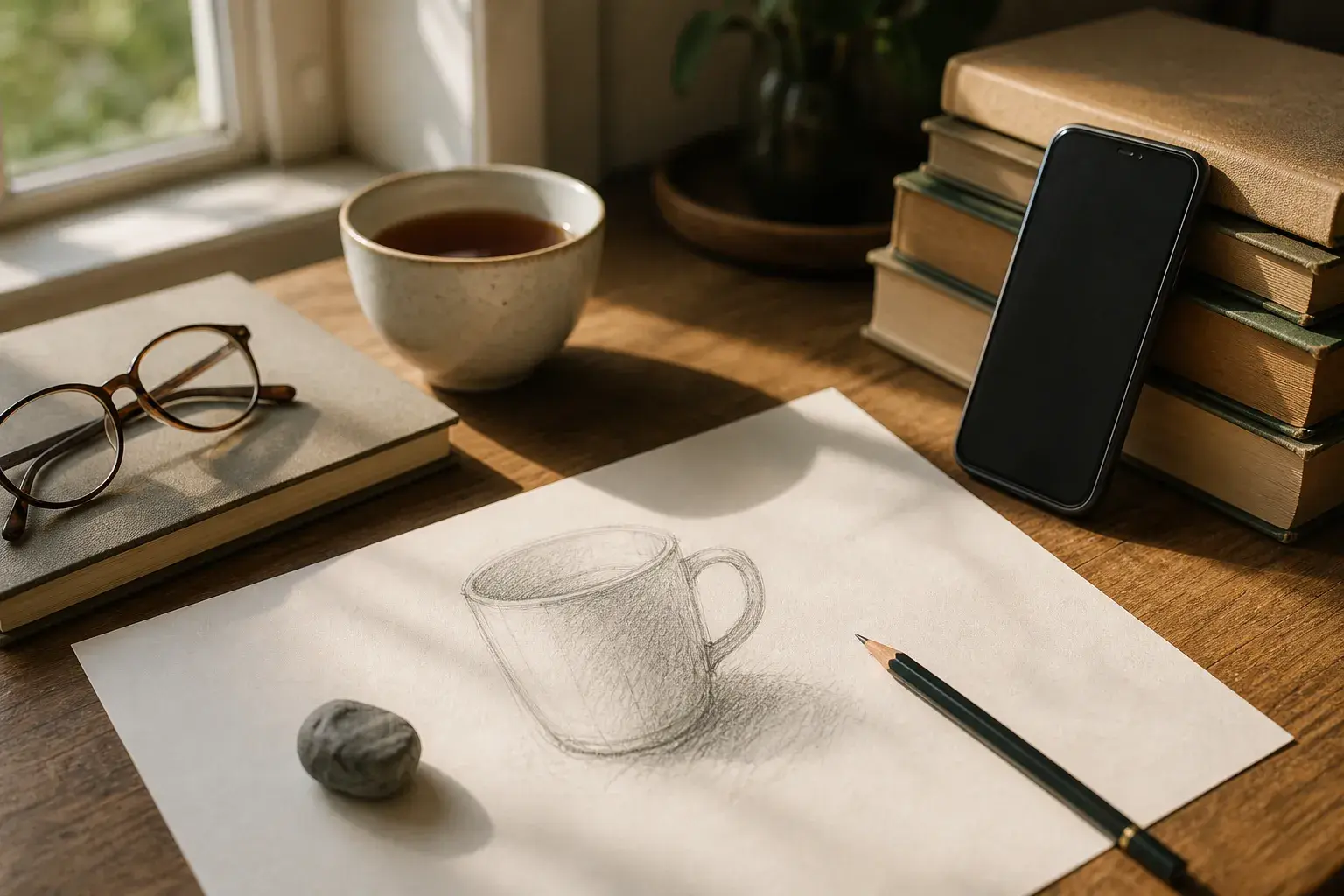
- Week 2Light and shadow. Memory drill on an apple, compared with the shaded apple lesson.
- Week 3Overlap and construction. Build a bird from ovals, then redraw it from memory.
- Week 4Invention. Design a mug, a teapot and a lamp. Lay out all 20 pages and name your best skill.
Stages to follow are in the pencil mug lesson, the shaded apple lesson and the cartoon bird lesson. A day-by-day version is the 30 day drawing challenge for beginners, which includes an invention day.
Where Sketchwise helps
Sketchwise handles the reference half. It turns any photo you pick into a staged lesson with a guide image for every stage, and Draw again lets you repeat a lesson and compare your attempts. Redraw a lesson a few days later without looking at the stages: that is the drill with the guide taken away. You draw on real paper with the phone propped beside the page.
New to drawing? Start with the guide to starting to draw as an adult. Worried it is too late? Read this.
Frequently asked questions
How do I learn to draw from imagination?
Draw from life and photos first, then do the memory drill. Imagination can only recombine what you have already stored.
Is using a reference cheating?
No. Artists have trained from observation for centuries. Peek when stuck, solve it, put it away.
How long does it take to draw from memory?
Expect visible gains in the four-week plan, not mastery. Compare your dated pages to check.